
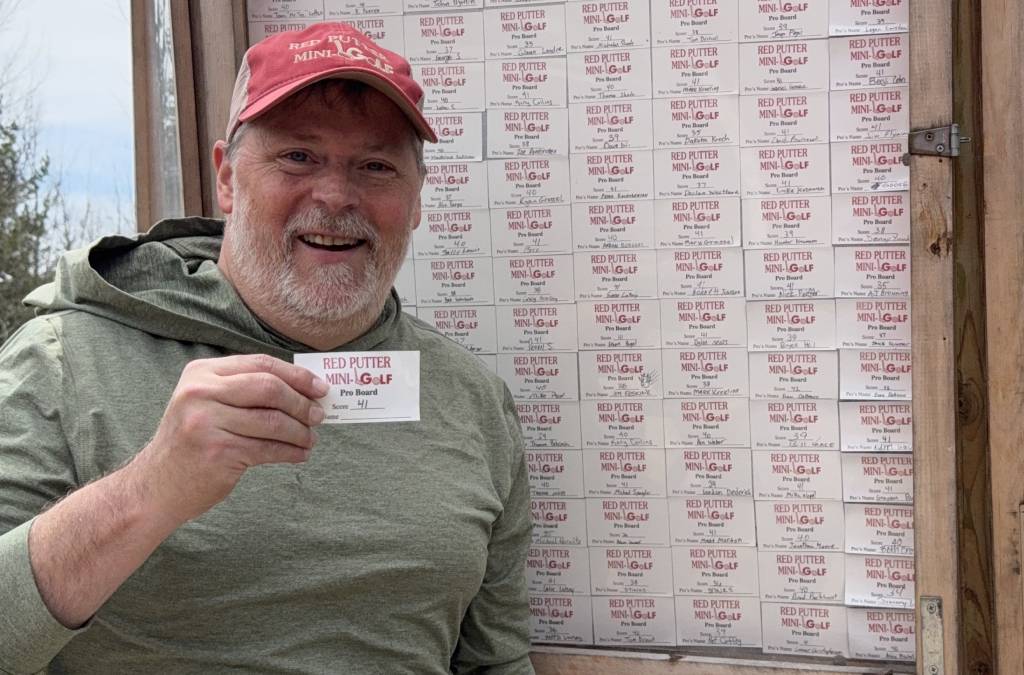
How I Qualified for the Red Putter Tournament
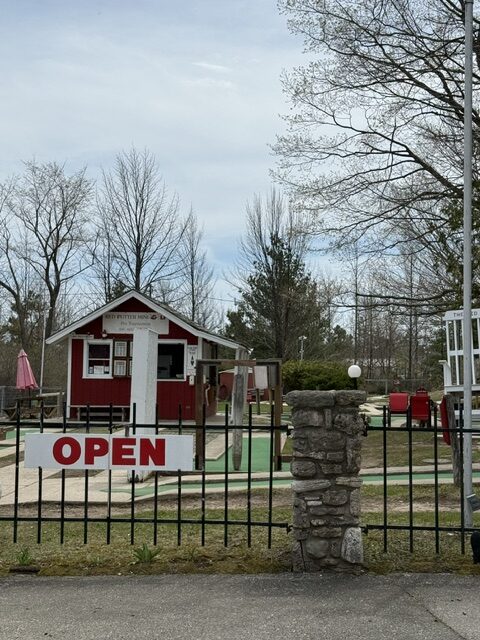
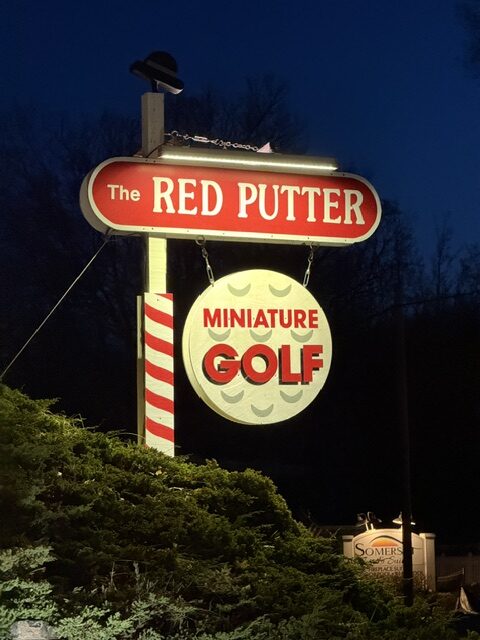
The Red Putter is one of those Door County institutions you don’t fully appreciate until you’ve been pulled into its orbit. Tucked along Highway 42 in Ephraim, this 18-hole mini golf course has been a fixture for decades, and every August it hosts what might be the most surprisingly competitive mini golf tournament in the country.
This year, I finally decided to go for it. I qualified for the 2026 Red Putter Pro Tournament. Here’s everything I learned about the event, what it takes to compete, and the journey that took me 13 rounds to earn my spot.
What Is the Red Putter Tournament?
The Red Putter Pro Tournament is an annual mini golf championship held at The Red Putter Mini Golf in Ephraim, Wisconsin. The 2026 event will be the 24th annual tournament. It’s also a sanctioned American Mini Golf Alliance (AMA) event, meaning competitors earn AMA scoring points and the tournament serves as the AMA Midwest Regional Championship.
Key details for the 2026 tournament:
- Date: Saturday, August 1, 2026
- Location: The Red Putter Mini Golf, 10404 Wisconsin 42, Ephraim, WI
- Time: 9:00 AM gathering, 9:30 AM tee-off
- Format: Individual stroke play, 3 rounds of 18 holes
- Entry fee: $30 (includes free practice the week of the tournament and lunch)
- Field size: 84 to 88 competitors in recent years
- Total purse: $2,700
You can find official information on the AMA’s 2026 Red Putter event page.
How Do You Qualify for the Red Putter Tournament?
This is where the tournament gets uniquely fun. You can’t just sign up. You have to qualify by playing the course and turning in a scorecard that beats par.
The qualifying rules are simple:
- Course par is 42 (across all 18 holes)
- You must shoot 41 or better in a single round to qualify (under par)
- Pre-qualifying rounds can be played any time from the end of the previous tournament through the night before that year’s tournament
- For the 2026 tournament, that means qualifying rounds can be turned in any time through July 31, 2026
You play your normal round, and if you beat par, you tell the staff and they record your qualifying score. That’s it. You’re in. (Well, you still need to register and pay the entry fee, but the hard part is shooting the score.)
If that sounds easy, I can tell you from experience: it’s not.
What Does It Take to Win?
I dug into the 2024 hole-by-hole results, 84 players across 252 rounds and more than 4,500 individual hole attempts, to understand what separates the winners from the qualifiers.
Here’s the per-hole breakdown of how the field, the top 12 finishers, and the top 3 “in the money” finishers actually scored.
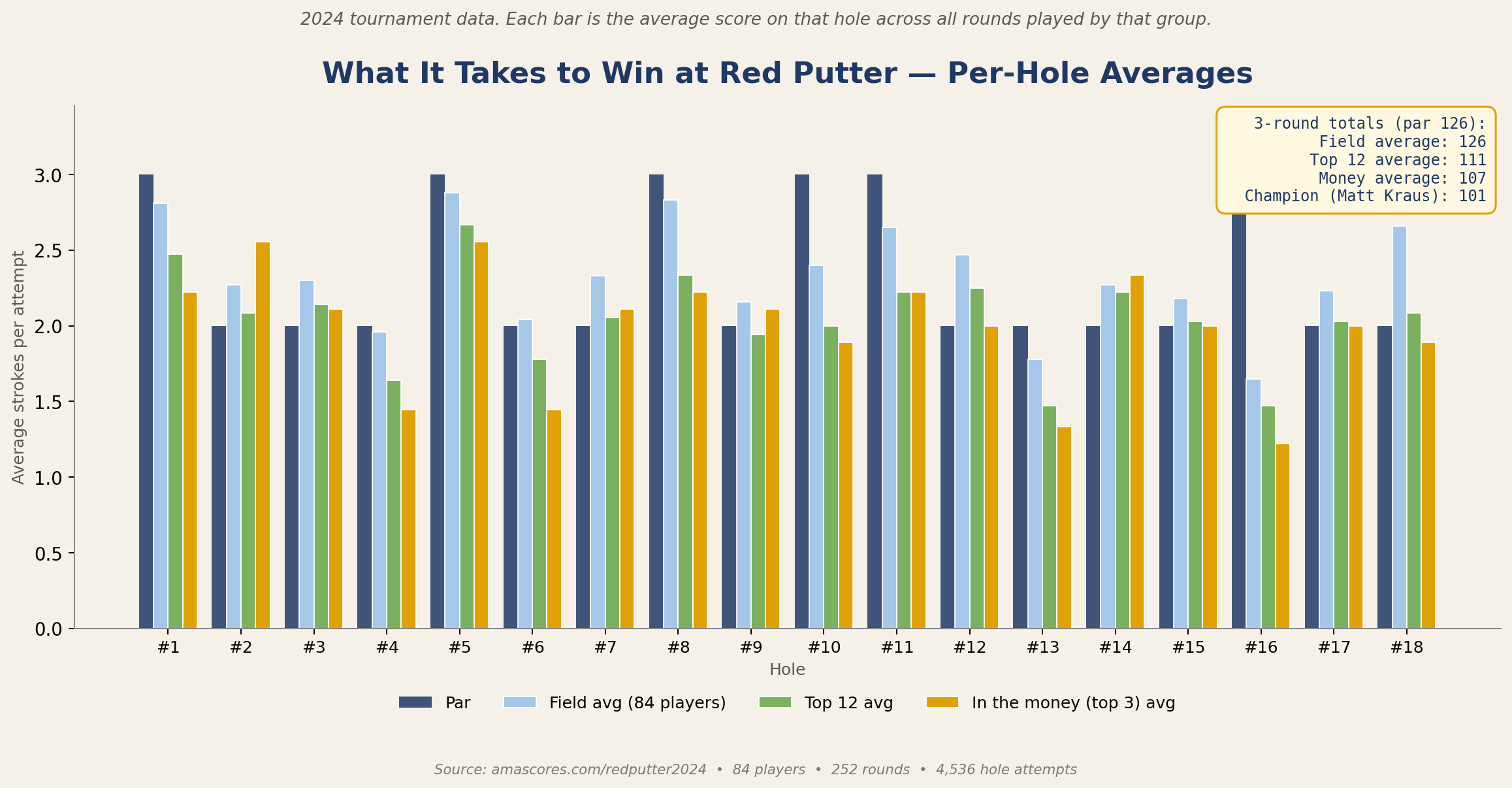
A few takeaways:
- The 2024 field averaged 125.6 across three rounds, slightly under tournament par of 126. About half the field shot above this number and half shot below.
- The top 12 finishers averaged 111 across three rounds, about 5 under par per round.
- The top 3, the “in the money” group, averaged 107 across three rounds, or roughly 6 under par per round.
- Champion Matt Kraus shot 101 (32, 36, 33), tying the tournament record. He has now won the tournament four times overall.
- In 2025, Danny Monchamp won with a 104, made on the back of an astounding 15 hole-in-ones over three rounds, including an ace on his final hole (#13) to seal the win. Jeremy Inabinet was second at 105, with only 5 holes in the entire tournament where he took more than 2 strokes.
- In 2023, Matt Kraus won his third straight title and Mark Schroeder-Strong tied the all-time course record (31) on his way to “Best Single Game” honors, including a hole-in-one on Hole #1, only the 8th in tournament history.
So in three different years, three different storylines. But a consistent pattern: to be in the money, you need to average around 36 strokes per round, or about 6 under par. That’s elite minigolf.
What Do You Win?
The 2026 prize purse breaks down as follows:
- 1st Place: $2,000, a trophy, and The Red Jacket, the closest thing mini golf has to a green jacket
- 2nd Place: $500 and a trophy
- 3rd Place: $100 and a trophy
- Best Single Game: $100 and a trophy (awarded for the lowest single-round score of the tournament)
If you really want to throw down, check out the AMA’s full event details including the YouTube highlights from previous years.
My Story: How I Qualified
I’m not really a golfer. The big-grass, 18-hole, walking-five-miles-with-clubs version of the sport never caught me. Mini golf I enjoy from time to time, but I usually only play a handful of times a year, and almost always at the Red Putter. Going to Door County without playing the Red Putter just feels sacrilegious.
In the early 2000s, I started bringing a group of friends up to Door County each summer for what we called our own “Red Putter Invitational.” We were friendly, competitive only with each other, and the prize was nothing more than bragging rights. Bob, the owner at the time, picked up on what we were doing and asked us what the prize was. When we told him it was just pride, he smiled and said he could make it more fun. He went into the back, came out with a Tall Boy beer for the winner and a bag of Peanut M&Ms for the runner-up, and just like that the Red Putter Invitational had its trophies. Anyone who played at the Red Putter when Bob owned the place knows exactly what I mean when I say his joy for the game was contagious. Bob has since passed, but that tradition stuck around for years and the spirit he brought to the course still lingers.
Each year when the tournament rolled around, I’d wonder what it would be like to compete in it. This year, I decided to find out.
The Plan
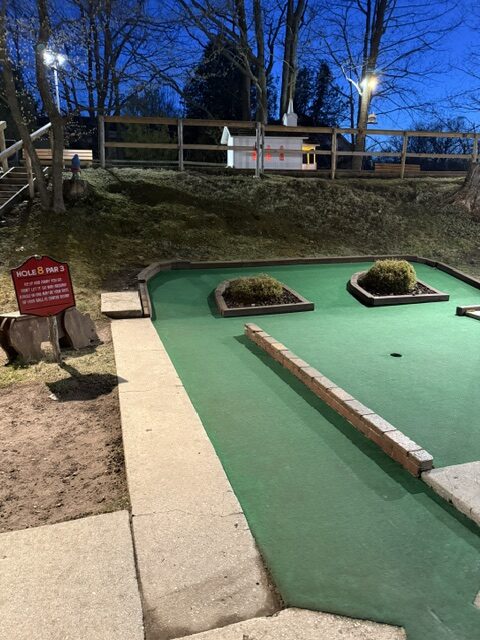
I figured my best shot was to get up to Door County before the busy summer season hit and play a lot of rounds. The bet paid off. Sunday night and Monday during the day, early in the season, meant I had the course mostly to myself. I could turn a round in under 20 minutes. Quiet course, more time to read each hole, no pressure to keep pace with a group.
The first day, I played eight rounds. I scored par (42) three times in those eight rounds. Three par rounds is excruciatingly close. I needed one round of 41 or better, and three times I came up exactly one stroke short.
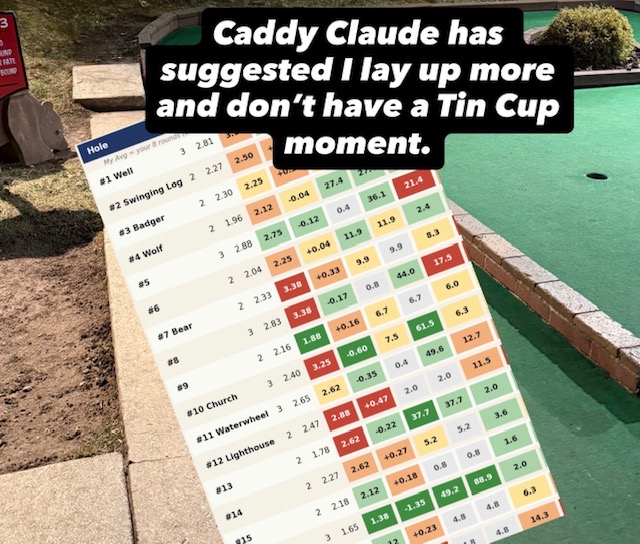
After eight rounds, I called it a night. That evening, I sat down with Claude, Anthropic’s AI assistant, and dug into the 2024 hole-by-hole tournament data. I wanted to understand where I was leaving strokes on the table, not against par, but against what other players were actually scoring on each hole.
What came out of that analysis was eye-opening. There were holes where I was matching or beating the top finishers (Hole #18 “Be a Bob Barn” turned out to be one of my strongest, despite being statistically one of the hardest hole on the course). And there were holes, especially on the back 9, where I was clearly leaving strokes on the table.
Day Two
The next day, I went back armed with a better mental map. I knew which holes the data said were ace-able that I’d been getting twos on. I knew which holes had high “trouble rates” where I needed to play conservatively rather than aggressively. I knew that the back 9 plays roughly 1.3 strokes easier than the front 9, for the entire field, so my mental energy could be calmer on the back even after a rough start.
I ground through more rounds. 49. 52. 43. 47. 51. The 51 was discouraging.
Then a piece of luck. After 12 rounds, I held a “Free Game” card I’d earned earlier from a hole-in-one on Hole #3 (a hole-in-one on #3 or #6 earns a free game from the Red Putter). I decided to use it on round 13, partly because of superstition. If 13 was unlucky, maybe a free game could counter that.
I started rough. Bogey on Hole #1. Bogey on Hole #2. By the time I closed the front 9, I’d scored a 23, two over par, and feeling like another shot at beating 42 had slipped away.
But the back 9 came together exactly the way the data said it could. No score worse than three. Hole-in-ones on both #16 and #18. A clean 18 strokes on the back 9, three under par.
Total: 41. I qualified.
I’ve Got a Long Way to Go
Across all 13 of my rounds, I averaged 46.15 strokes per round. To put that in context: in the 2024 tournament, that average would have placed me 71st out of 84 players, somewhere around the 17th percentile. I’m a qualifier, not a contender.
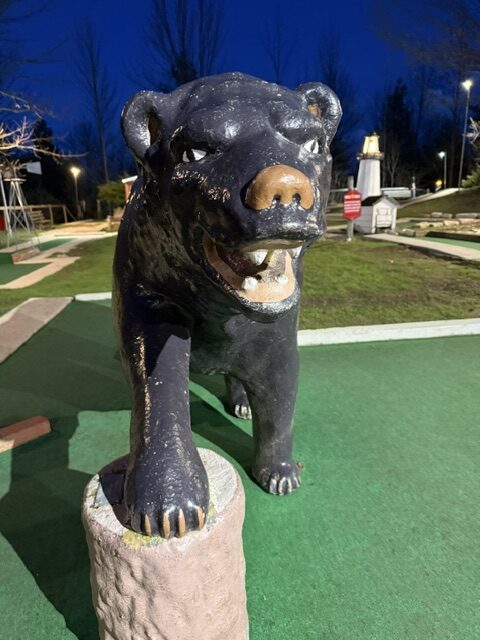
But that’s the thing about the Red Putter Tournament. Qualifying earns you the right to compete. It doesn’t earn you a chance at the Red Jacket. From here, my work begins. Now that I’m in, I’ll be back this summer to keep grinding, focusing on the four or five holes where my data says I’m leaving the most strokes on the table. I know I can improve on #7 The Bear and #12 Lighthouse.
If you’re someone who’s eyed this tournament from the sidelines like I did for years, here’s my advice: don’t wait. Pre-qualifying is open from now until July 31, 2026. Go play a round. Play a few rounds. The course is part of Door County’s soul, the staff is friendly, and the bar to “compete” is exactly one round of 41 or better.You don’t have to be a champion to participate. You just have to qualify.
Plan your visit: The Red Putter Mini Golf is located at 10404 Wisconsin 42 in Ephraim, Wisconsin, right in the heart of Door County. The 2026 Red Putter Pro Tournament will be held Saturday, August 1, 2026. For full event details, visit the AMA event page.
Have you played the Red Putter? Share your best score and your favorite hole in the comments!
WeWisconsin Tip:
Don’t have a Tin Cup moment. The single biggest thing standing between you and a qualifying round is the blow-up hole. The data is clear: you can recover from a 4 (a bogey on a par-3 or a double on a par-2 still leaves your round within reach), but a 5 or 6 will sink you. One disaster hole can erase the gains from three or four good ones. So when a putt goes sideways, take your medicine, accept the 3, and walk to the next tee. Steady is faster than spectacular at the Red Putter.